
The Actual Problem is Happiness: Using AI to Heal, Not Just Distract
How I built a Multi-Agent System that Optimizes for happiness and prioritize mental wellbeing?

A while back, I wrote a post on LinkedIn that seemed to resonate with a lot of you. I was looking at the startup ecosystem and realized something unsettling: We have become experts at solving temporary problems.

We have mastered instant home deliveries. We have solved door-to-door travel. We have built entire industries around helping people earn and save money.
But what happens after we save that time?
Often, a second wave of companies—social media, endless streaming, doom-scrolling apps—sweeps in to capture that “saved” time.
We saved minutes on groceries only to lose hours to distraction.
Even education companies, which promise better careers and higher salaries, often result in corporate friends who are burnt out and unhappy.
The actual problem isn’t efficiency. It’s happiness.
And frankly, most technology today doesn’t know how to solve that.
In that post, I suggested three starting points to fix this:
Mental Therapy (Access to care)
Humanizing Business (Empathy in work)
Tech Empowerment (Tools that heal rather than distract)
Today, I want to talk about that third point: Tech Empowerment.
Building the Solution
As we step into the New Year, I didn’t want to just make resolutions. I wanted to build a tool that helps keep them.
I realized that while I cannot replace a human therapist, I can use the latest advancements in AI agents to make support more accessible, immediate, and structured.
This week, I built a Multi-Agent Mental Wellbeing System.
Unlike a standard chatbot that gives you generic advice, this system mimics a supportive care team. It is designed to help you deal with the chaos of life—whether it’s job stress, relationship anxiety, or just that overwhelming feeling that comes with a new year.
How It Works (and How It Helps You)
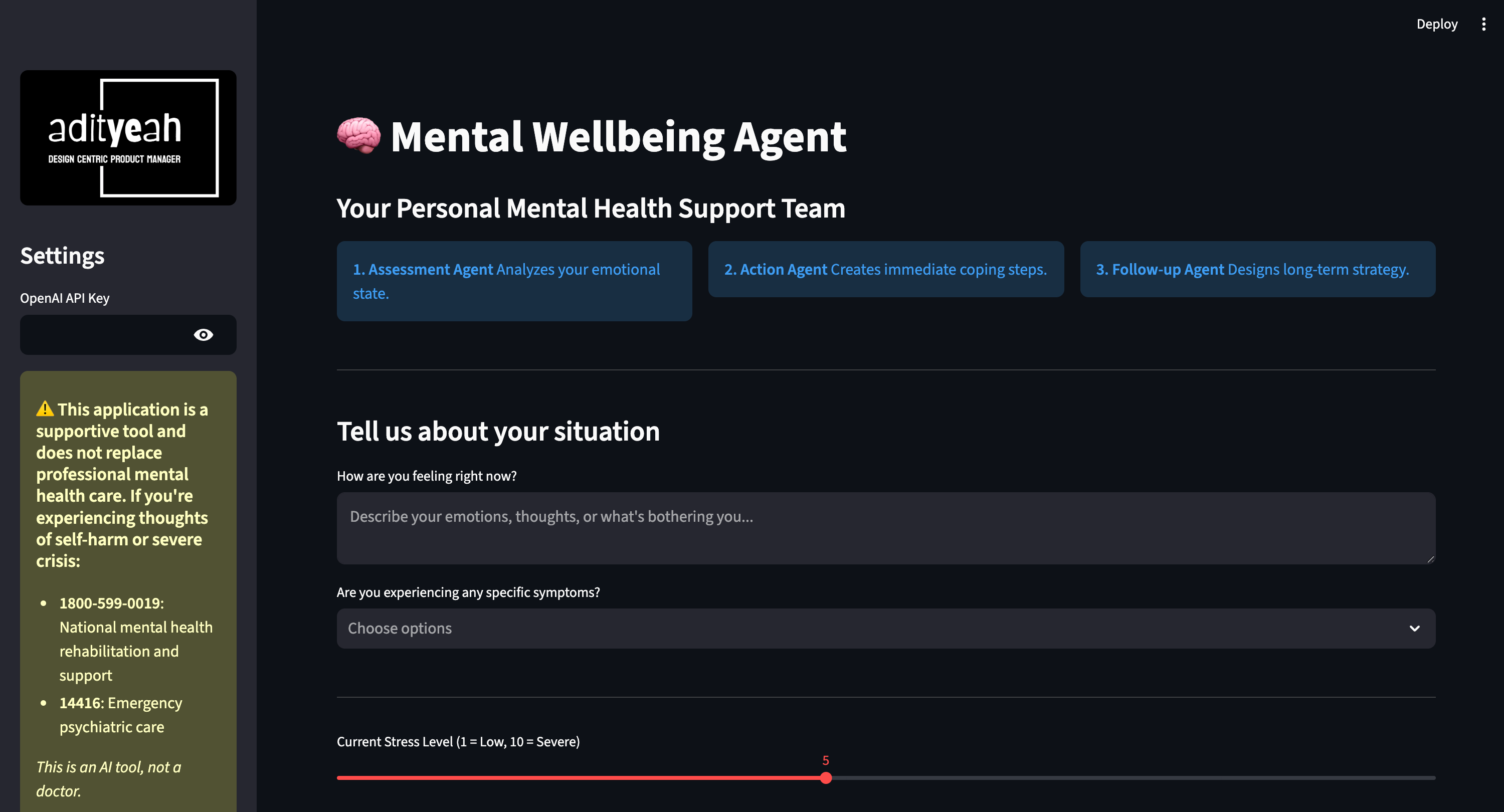
The tool isn’t just one AI; it is a “swarm” of three specialized agents working together to support you:
1. The Listener (Assessment Agent): We often just need to be heard. This agent doesn’t try to “fix” you immediately. It listens. It analyzes your emotional state, sleep patterns, and stress levels to understand exactly where you are standing right now.
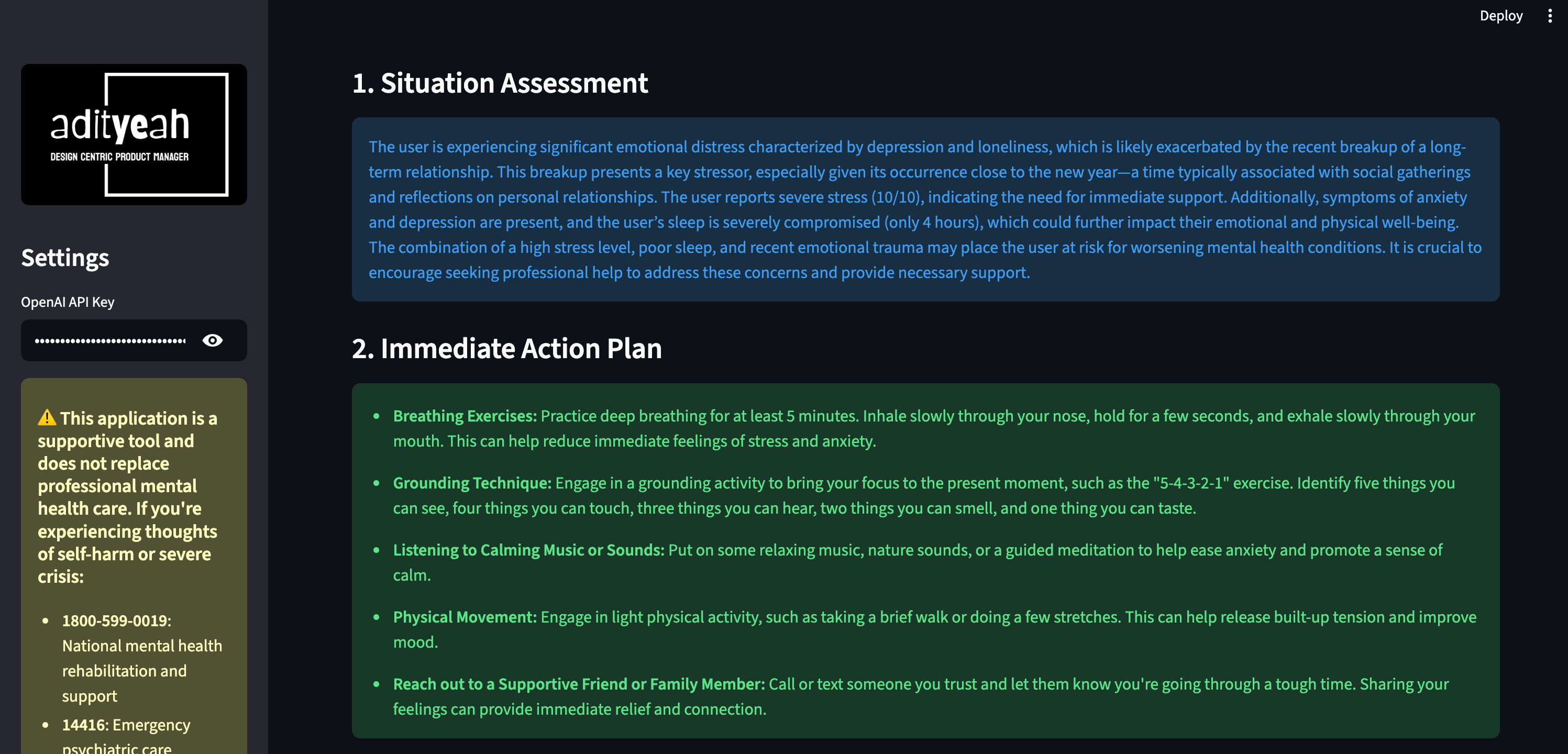
2. The Helper (Action Agent): Once you’ve been heard, you need clarity. This agent cuts through the noise. It provides immediate, concrete steps—whether that’s a breathing exercise for right now or a resource to call tomorrow. It turns anxiety into action.
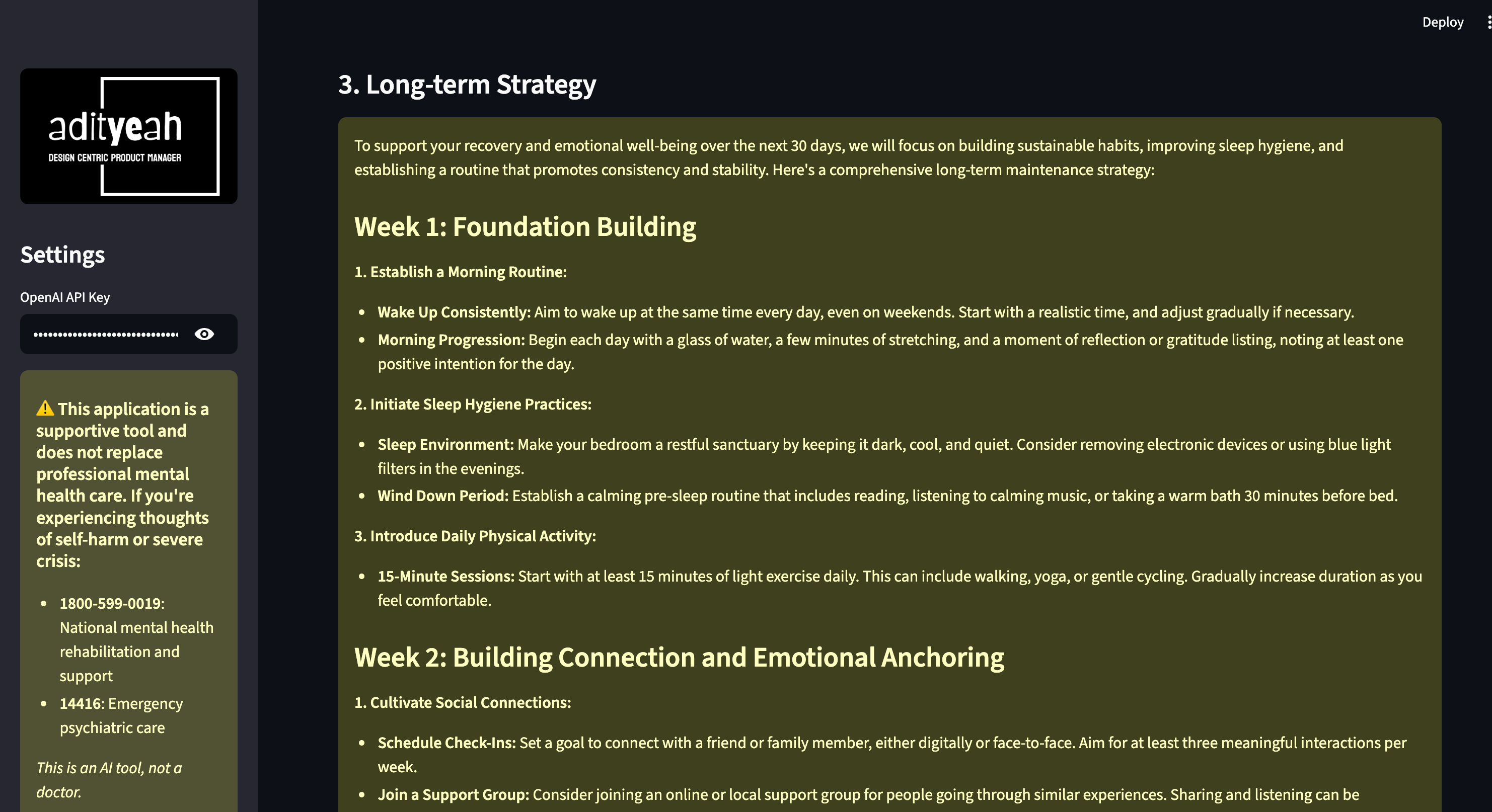
3. The Partner (Follow-up Agent): This is the piece most tech misses. We don’t just need a quick fix; we need a lifestyle change. This agent builds a long-term strategy for you, focusing on habits and sustainable routines.
A Tool for the New Year
The New Year is often a source of pressure. We set massive goals and feel like failures by February.
I want this agent to be a tool for resilience, not just productivity. It is an example of technology that doesn’t demand your attention but supports your intention.
If you are feeling the weight of the world, or just the weight of a hectic job, give it a try. Let’s use technology to reclaim not just our time, but our peace of mind.
Here’s to a happier, healthier, and more empowered 2026.
Adityeah
P.S. For the Builders
For those interested in the architecture, this system uses AG2 (formerly AutoGen) to orchestrate the agents. By separating “Empathy” (Assessment) from “Logic” (Action), we drastically reduce hallucinations and improve the quality of care.
You can check out the open-source code here: